Every brand team now has two things to get right. The first is the brand system: the guidelines and templates that make the brand theirs. The second is the design harness, the surface through which an agent works with that system, with a person guiding it, to produce design work. Most harnesses being built today only enforce: check the palette, check the type, flag the logo, score the adherence. The pitch is always that the machine will stop your team going off-brand.
That is half a harness. Enforcement alone makes work that is correct and dead, because a launch poster that follows every rule looks like everything else you made that year. The industry is building the half that is easy to measure and calling it finished.
Add the missing part: a sanctioned way to break the rules.
The argument I am stepping into
There is a live disagreement about how much scaffolding an agent needs. Replit recently published Free the models and argued for less of it: every model release breaks assumptions the harness bakes in, so the smarter the model, the less the harness should decide for it. Replit reads this as an instance of the bitter lesson.
For coding agents, I think they are right. For brand work, the lesson does not apply, and it is worth being precise about why.
The bitter lesson is about capability. Scaffolding that makes up for what a model cannot do yet ages badly, because next year the model can do it.
Brand constraint is a different thing. It is private information: your hex values, your type scale, your logo clear space, the three things your legal team will not sign off. None of that is in any training set, and no model progress puts it there, so a harness that carries your brand system does not go out of date when the model gets smarter. It gets more useful.
So scaffold less for capability and more for constraint. These are two different jobs, and the bitter lesson only eats the first one.
Stop piling on
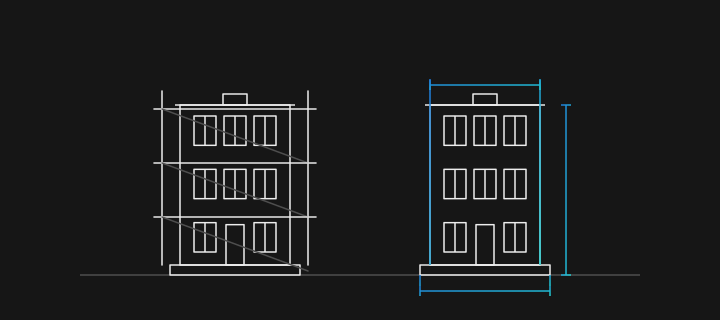
Knowing what to scaffold for also tells you what to leave out. Most teams specialize a general agent by piling things onto it: a design system as context, a skill for each task, instructions for the brand voice, MCP servers for the tools. Each addition helps on its own, and together they bury the agent, which reads pages before it starts and mixes a rule from one skill with a limit from another. I have watched the same model go from sharp to scattered because I gave it more to carry.
SkillsBench found the same across many tasks: low-signal context makes the output worse.
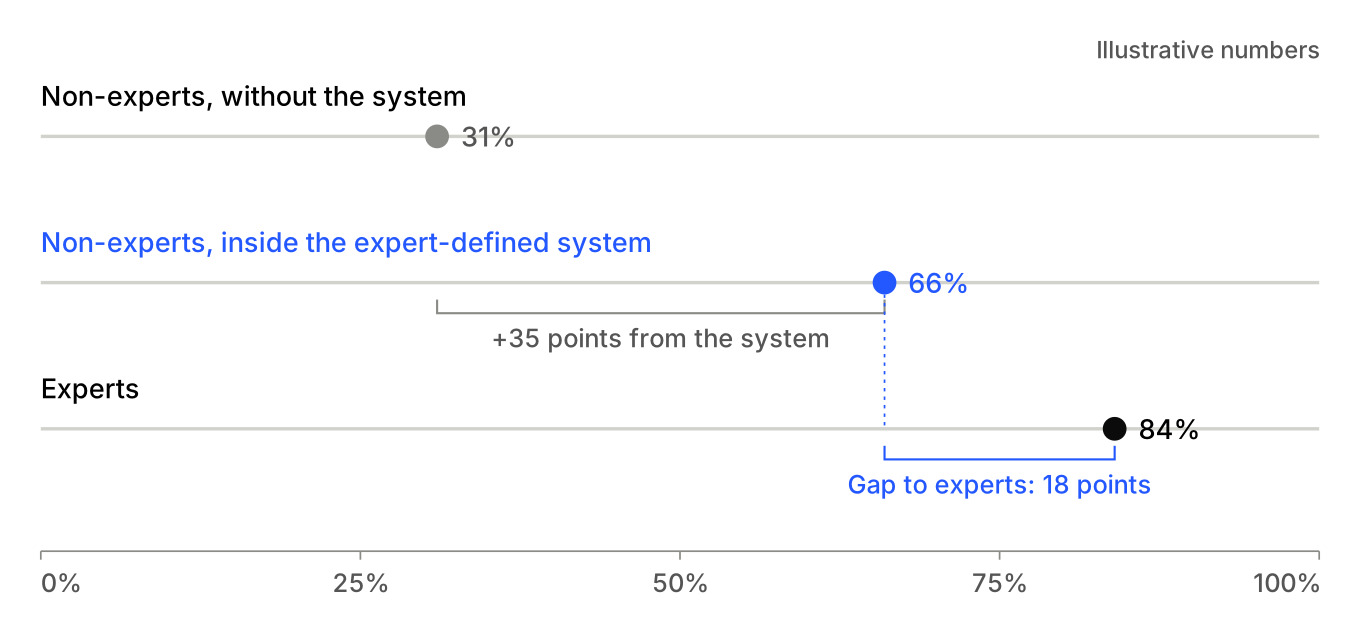
On a bare general agent, a model feels junior. Add a design system and it feels mid-level. Give it a harness built for brand work and it can work like a senior operator.
The five parts of a design harness
Picture a brand team that ships posters, social posts, banners and launch assets every week. Its harness needs five parts.
-
Make the agent answer in structure. Take a goal in plain language, like “make the autumn launch poster for Instagram,” and have the agent answer with a declarative document mapped to the layouts, variants and properties your brand allows. That way it cannot improvise an element your brand does not have.
-
Give it only your building blocks: your colors, type, logo rules and the templates your designers made, so it composes only from those parts. When the agent reaches for a color outside your palette, it finds nothing to grab.
-
Measure what code can measure, and be honest about the rest. We lint code, so lint layouts the same way: an off-palette accent, a headline in three weights, a logo with too little clear space. Report each finding with the asset and the exact value.
Then say where measurement stops. Some checks are measured, some are estimates, like a typeface match from pixels, and some are only the model’s impression of the work. Measured findings count against the score, estimates get hedged, and the model’s impression never fails an asset on its own. A person’s judgment can, because that is the job, but a machine’s guess dressed as a verdict destroys trust the first time it is wrong.
Treat accessibility thresholds the same way. Expressive campaign work breaks them on purpose, and designers ignore a checker that does not know that, so flag the risk and let the designer decide.
-
Put review inside the workflow, so the agent runs the steps the team already runs: generate options, review, refine, export. When the review flags something, the agent fixes it and checks again, and after three attempts it hands the work to a person. The reviewer never changes the work. It only reports.
-
Give the cage a door. Most harnesses leave this part out, and it decides whether your output has a pulse.
Restriction defines the brand. Divergence keeps it alive.
What a brand is not matters as much as what it is, and a wrong type weight, a color two shades off or a component outside its context can throw a whole brand off.
But great brand work knows when to break a rule, and a rule engine cannot tell drift from intent. A headline that bleeds off the canvas is either a mistake or the reason the poster works, and only a designer knows which.

So build the door. Let a designer break a rule on purpose and say so, then log the override with who made it and why, and do not punish it. When the override works, mark it as good work and feed it back into what the system learns from, so that over time the harness learns your team’s taste for divergence as well as the constants in your brand system.
A compliance tool knows the rules. A harness with a door also knows when your team chose to break them, and that record belongs to you alone.
Take the rules out of the context window
There is a fair objection here. I said MCP servers bloat a general agent, and now I am describing a rule engine shipped as one.
The difference is that a rule engine is not more instructions. It is a deterministic service, so the agent does not read your brand rules and try to remember them. It sends the work out and gets a measured answer back, which moves the rules out of the context window instead of filling it.
That is how we built Kitana. Her MCP server is the rule engine and the review loop, open to any agent. The agent makes the work, Kitana measures it against your brand, and the agent fixes what she flagged. Behind her, code measures everything it can and the model reasons only about the rest. Our engineering notes show how.
What I would bet on
The teams that win the next era of creative operations will not have the smartest models, because everyone will have those. They will have the most disciplined design harnesses, and the clearest way to step outside them.
Enforcement is the commodity, and every tool in this space will have it within a year. The record of when your team broke its own rules, and which breaks worked, is the part nobody can buy.
What does your team’s design harness look like, and where does it break?
First published on replikit.ai. Topics: design harness, brand systems, AI agents.